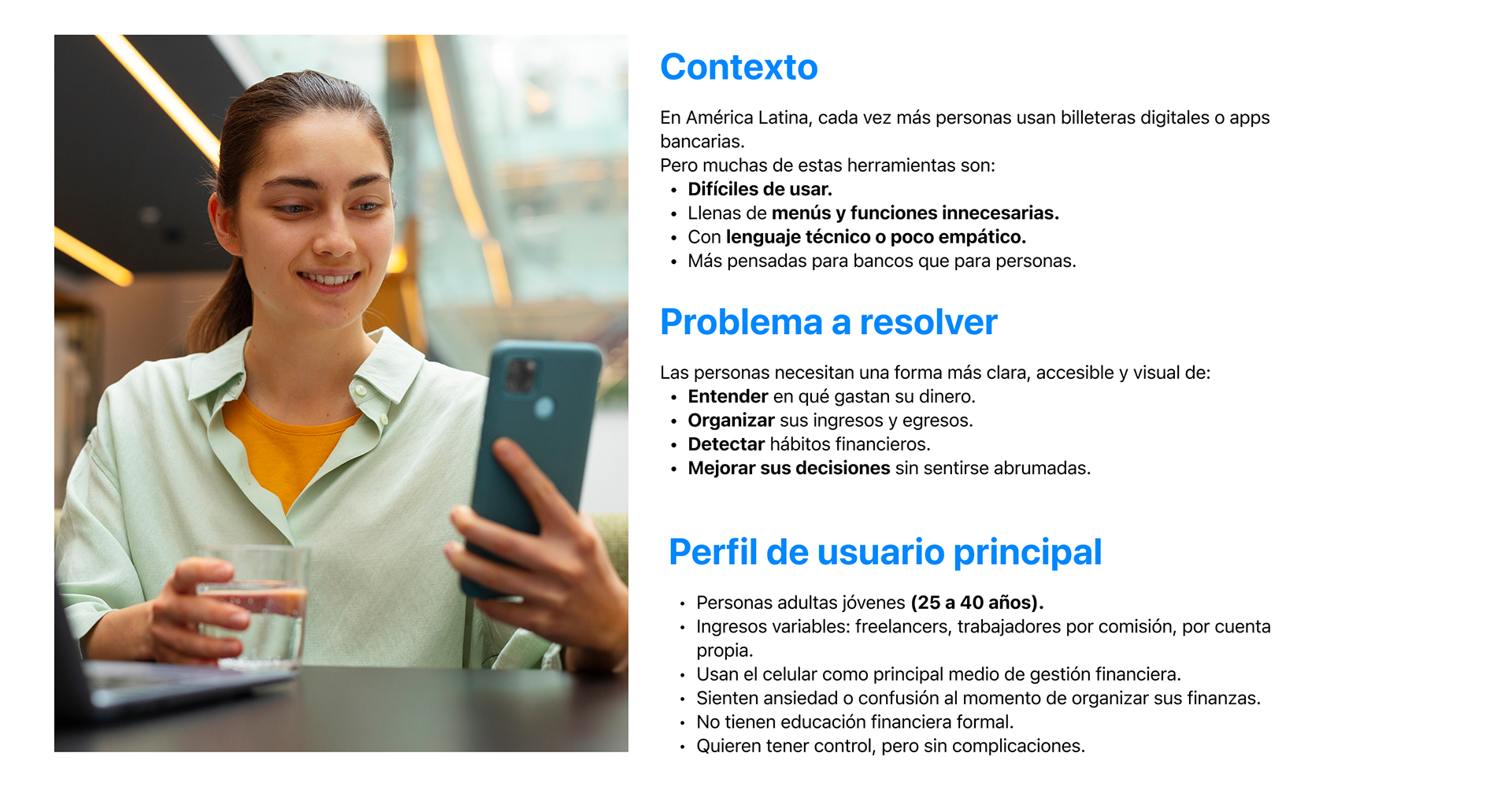
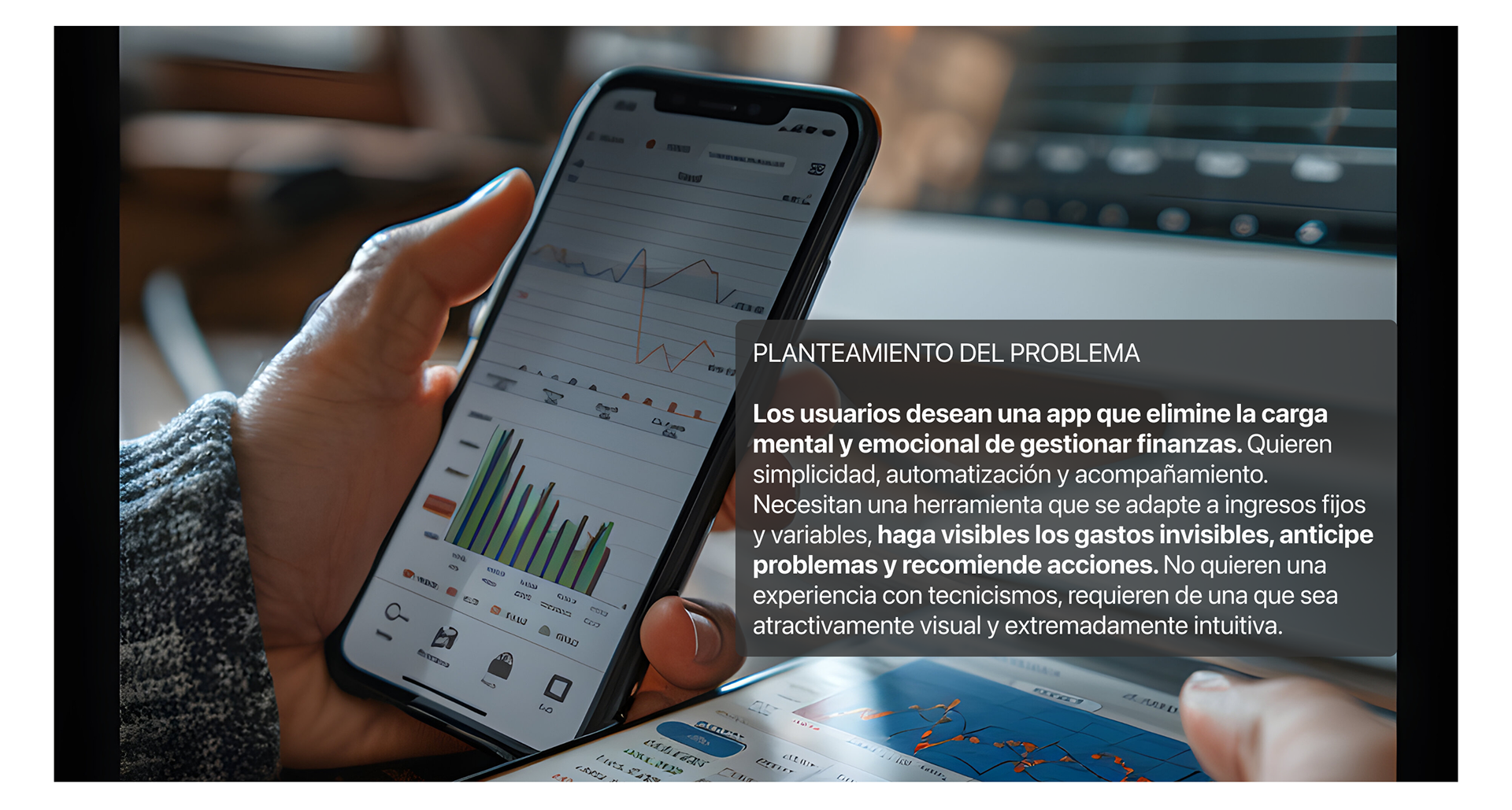
To better understand the needs and challenges people face when managing their personal finances, this user research was conducted to identify how this knowledge could be translated into a digital application.
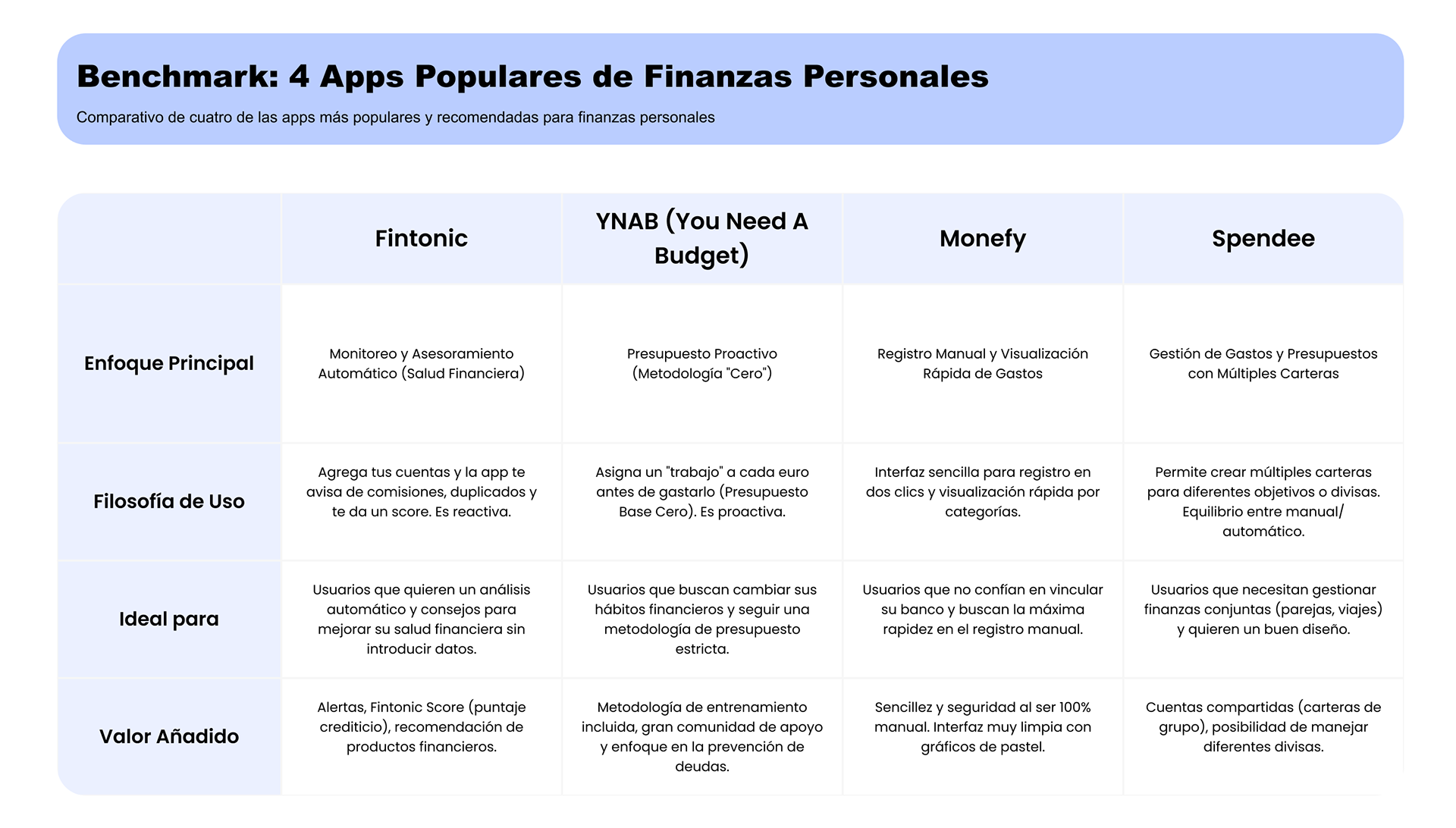
To conduct a thorough analysis, a comparative benchmark was carried out, evaluating four of the most popular personal finance applications currently available on the market.
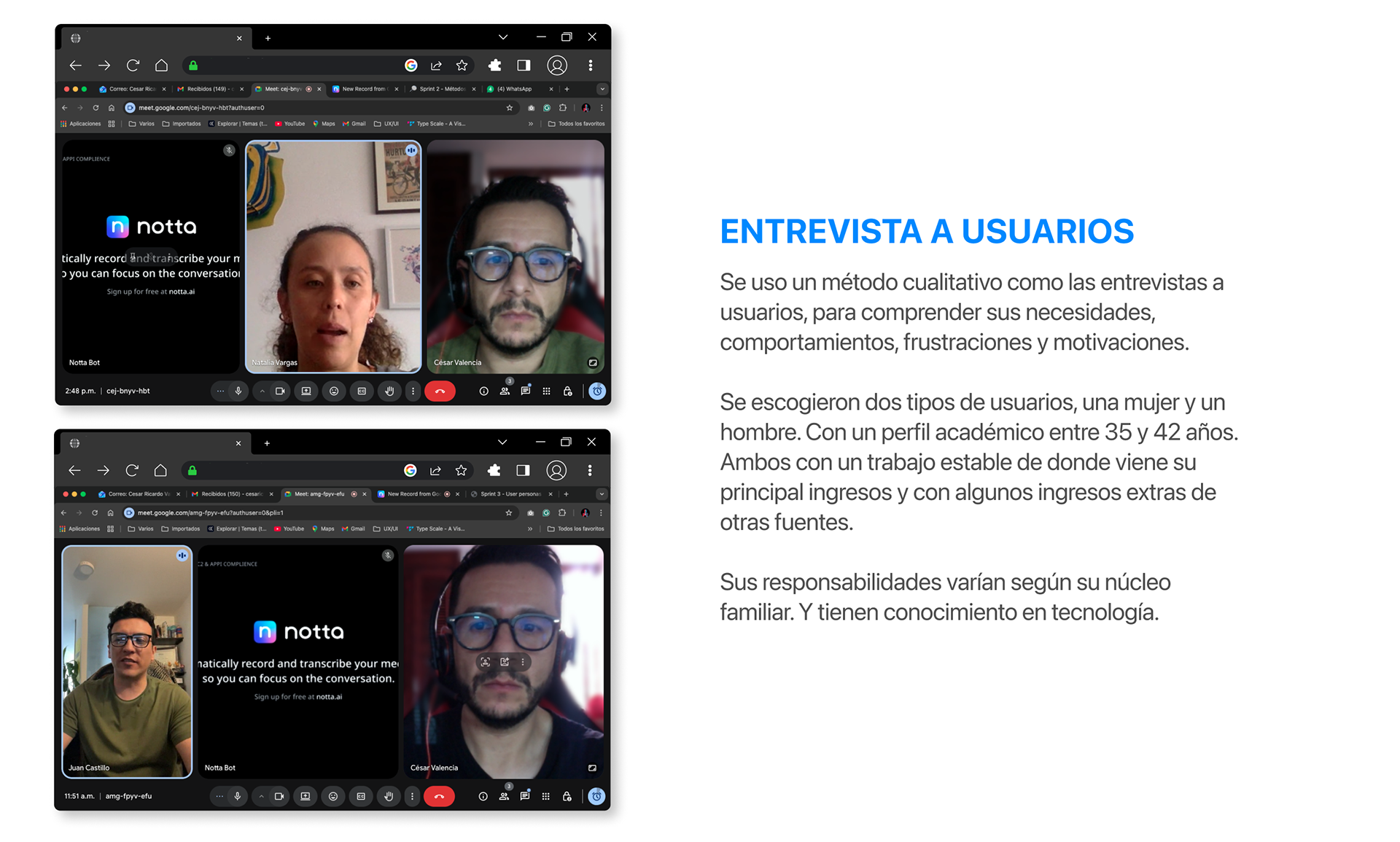
To gain an in-depth understanding of users' needs, behaviors, pain points, and motivations, a qualitative research approach was employed through user interviews.
Insights from the user interviews were analyzed using AI to identify key findings and develop empathy maps for both user personas.
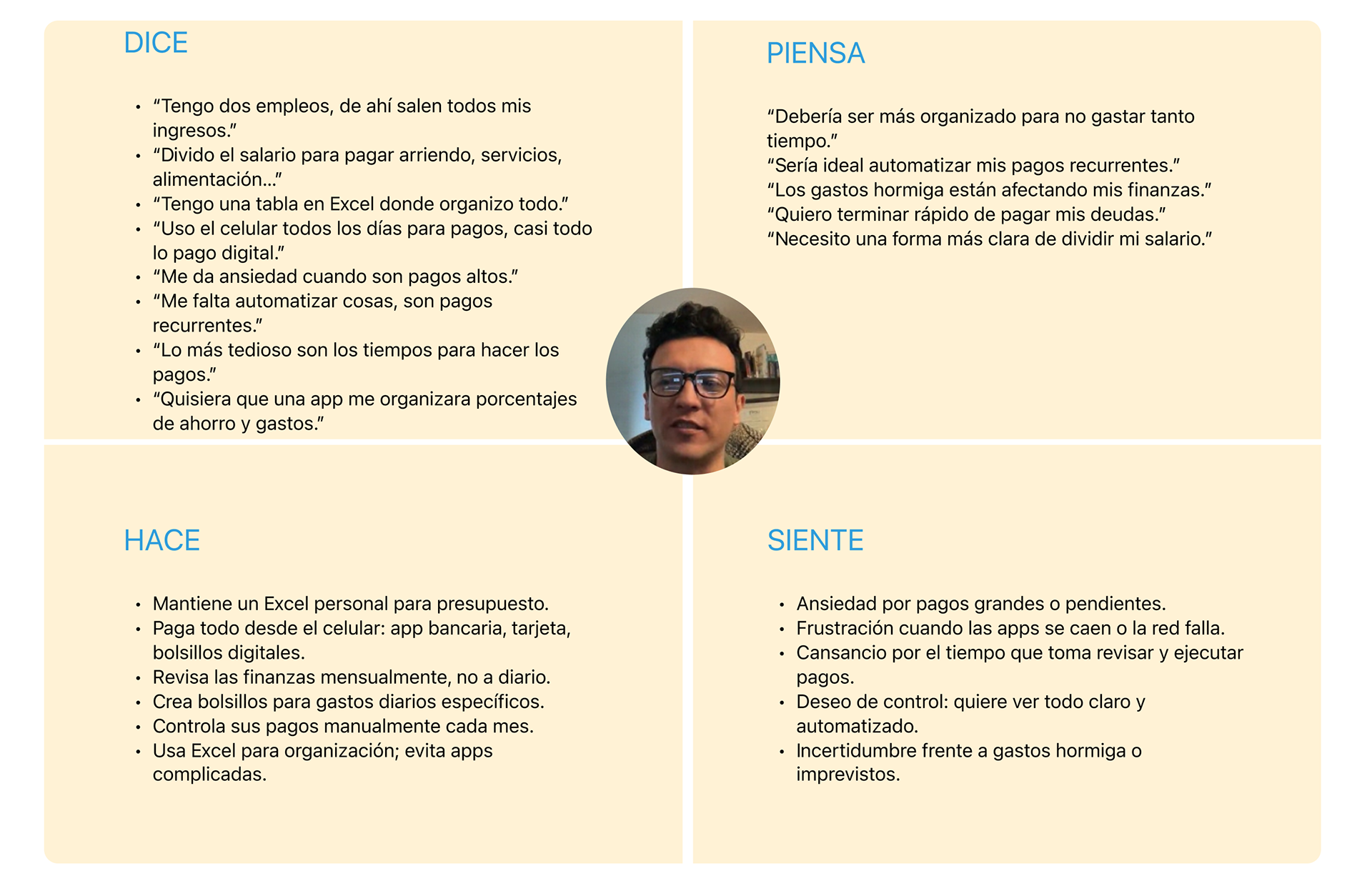
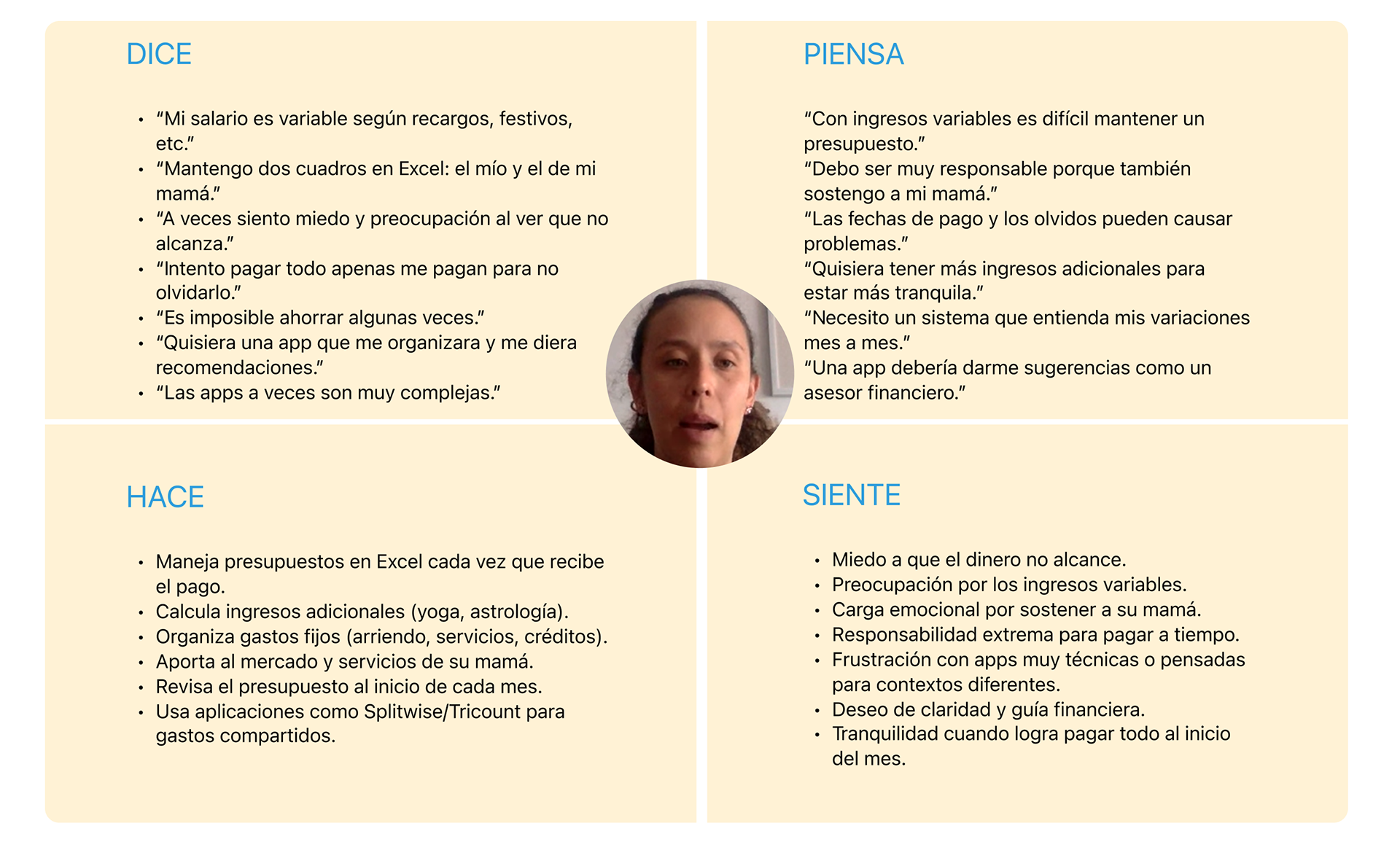
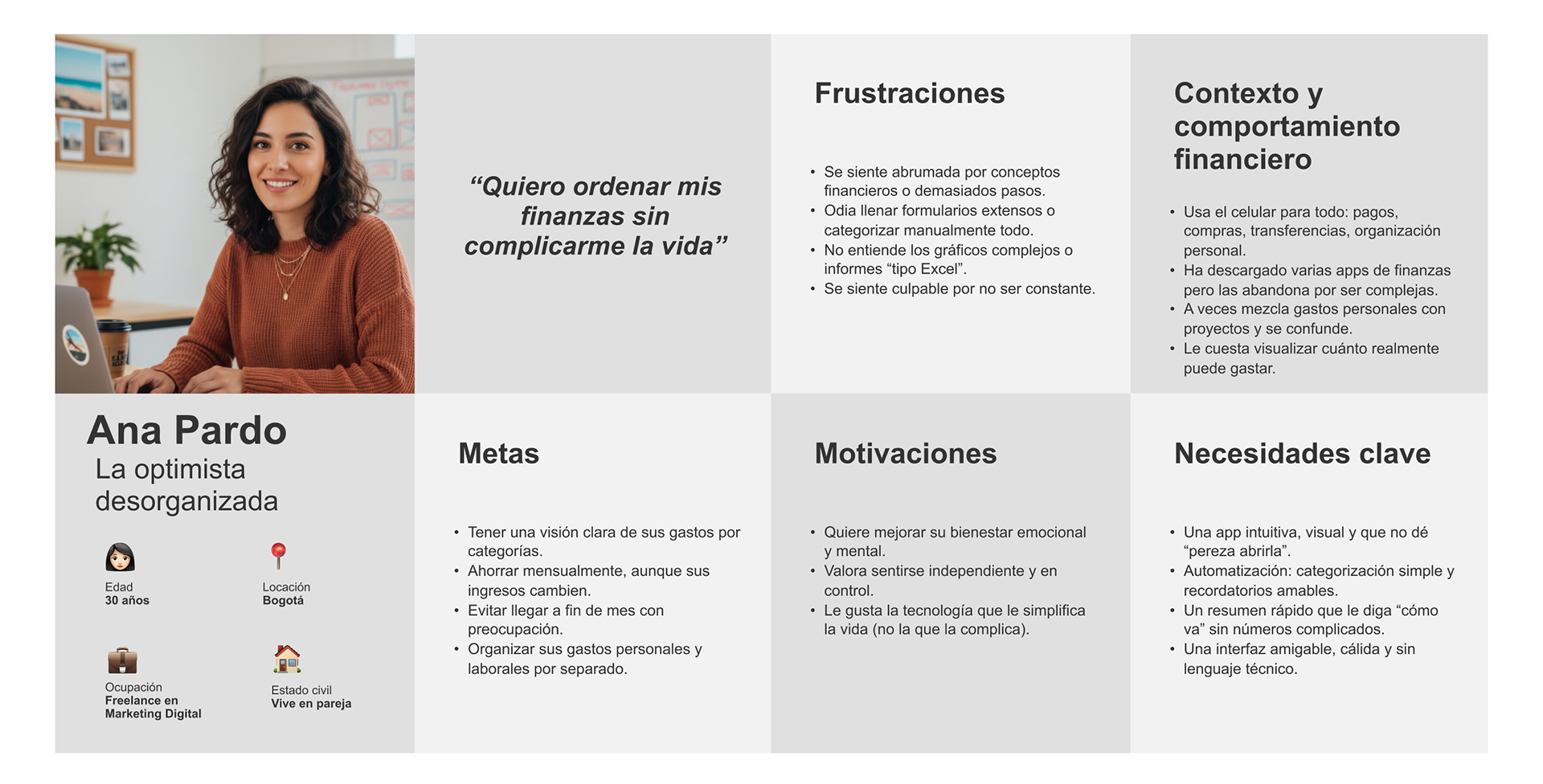
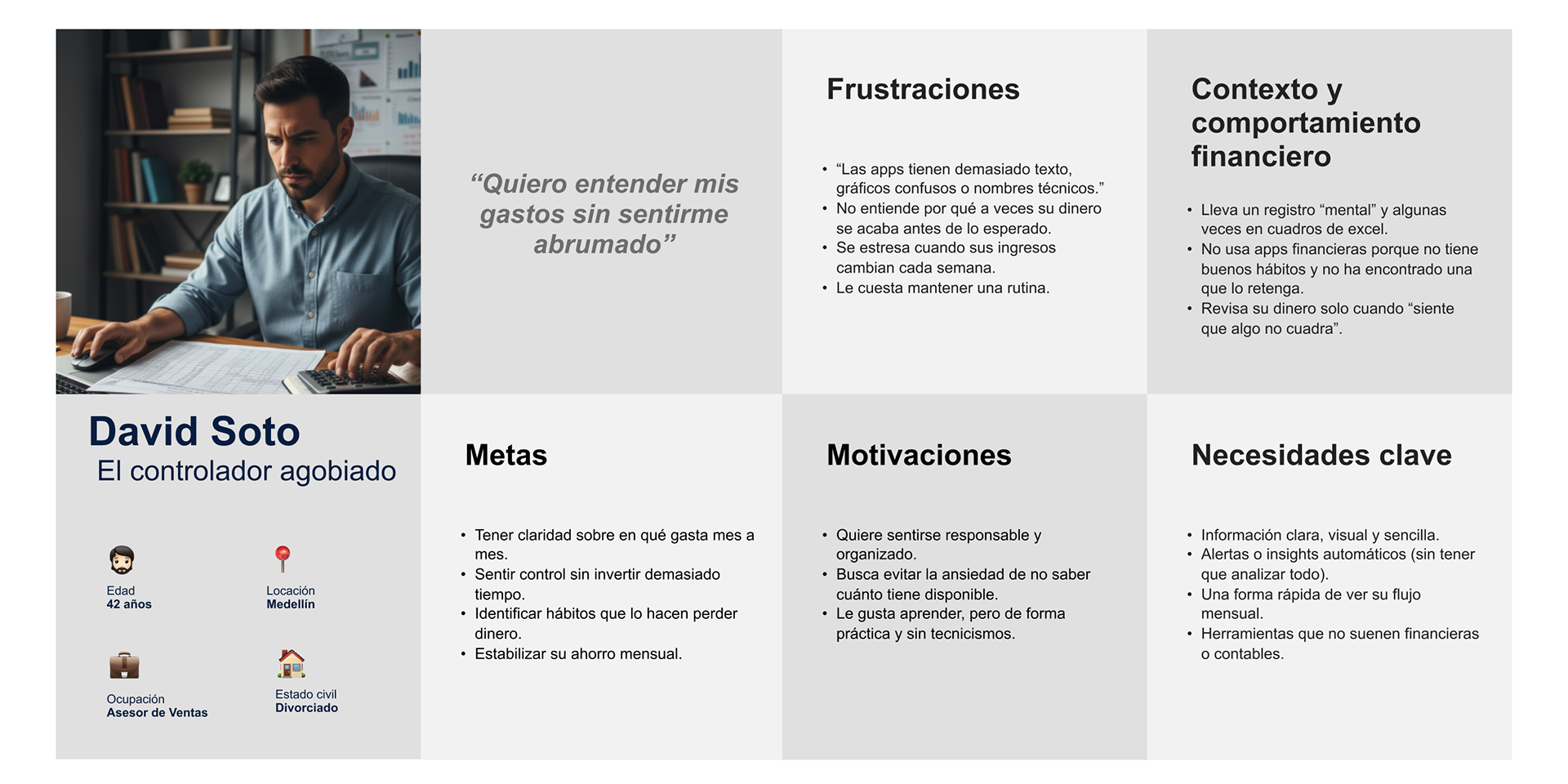
Based on the research insights and key findings, two representative user personas were created to reflect the target users' needs, goals, and behaviors.
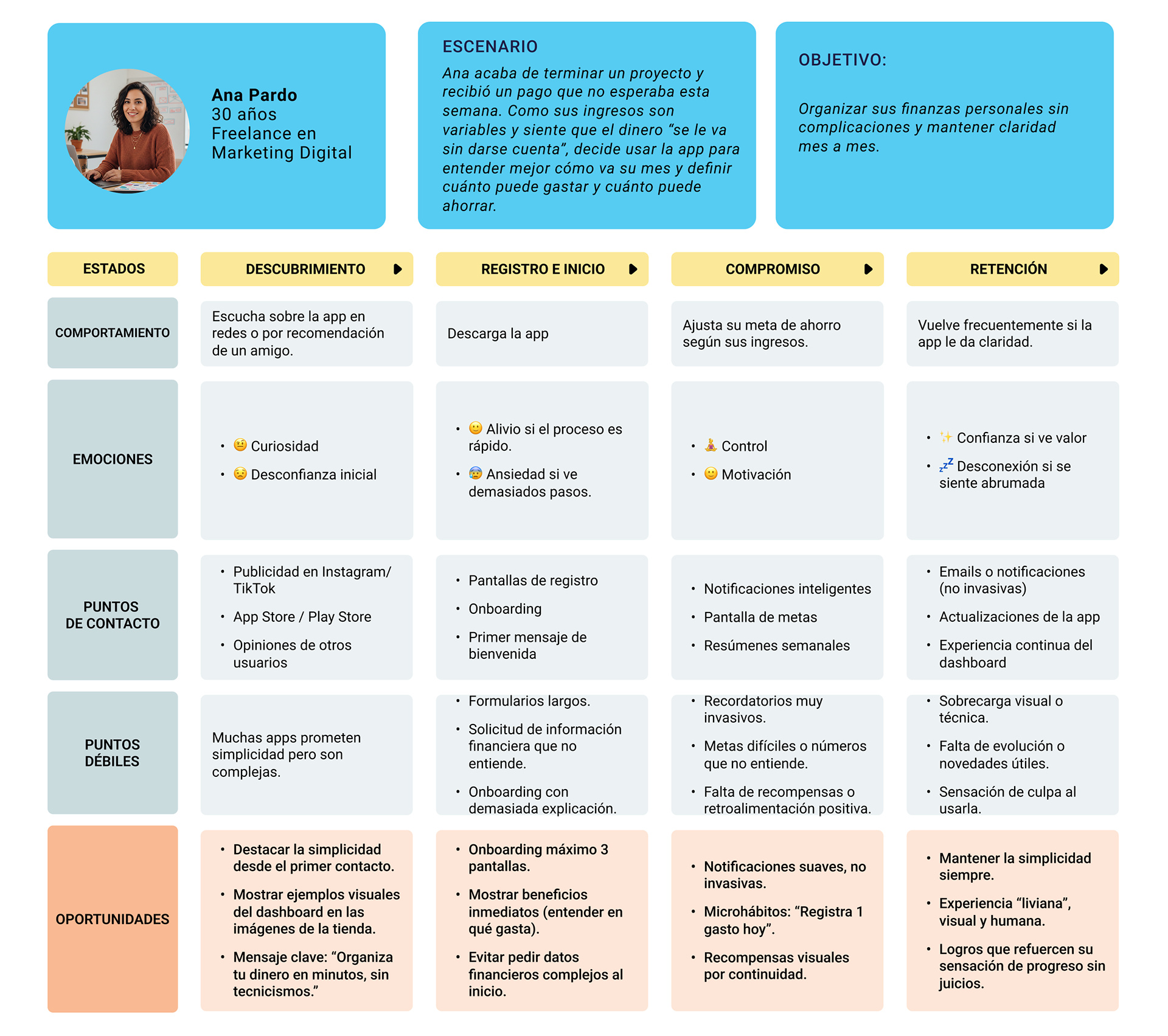
Based on one of the developed user personas, a user journey map was created to illustrate a hypothetical scenario and define a specific user goal.
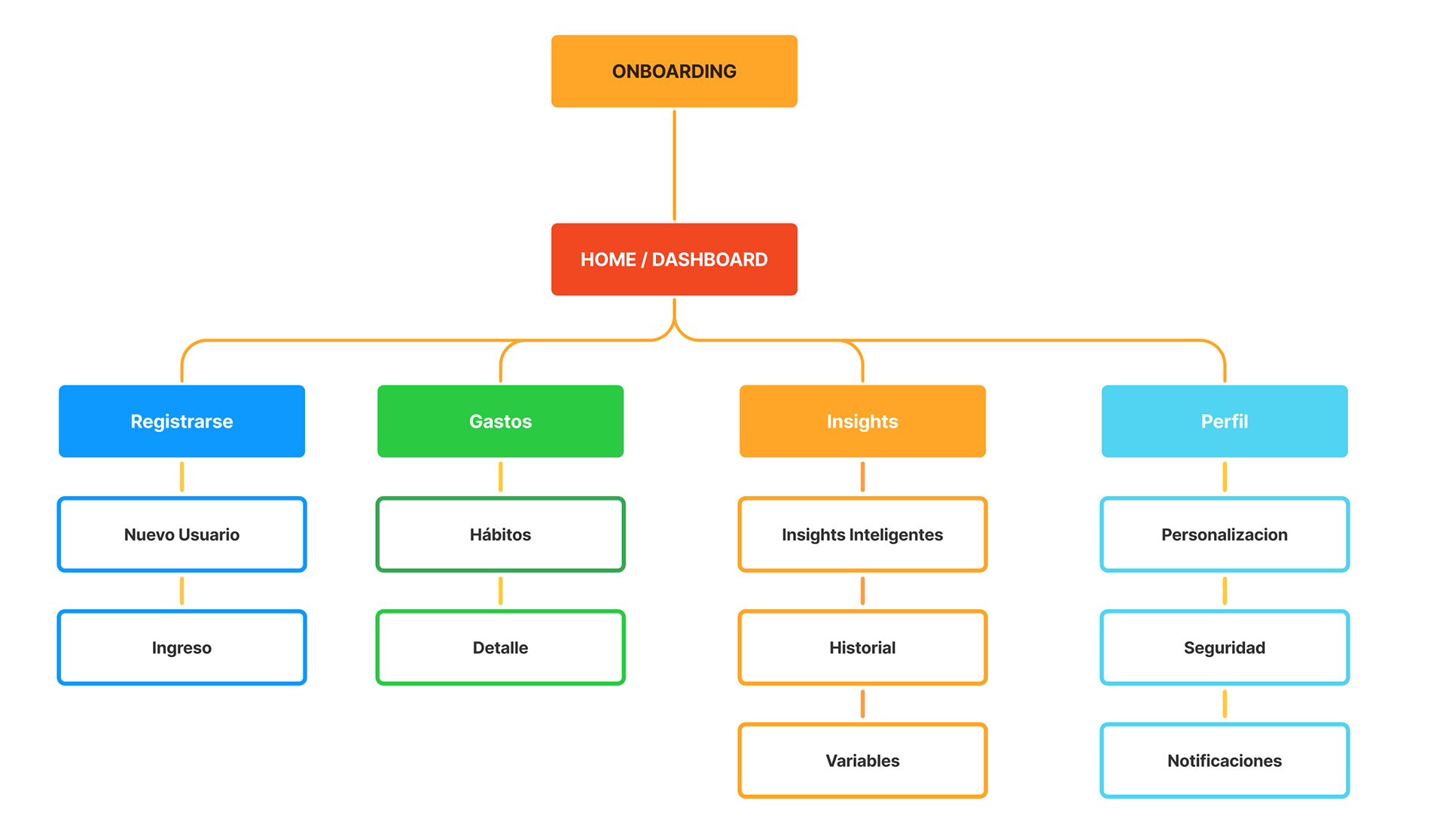
During the ideation phase, the information architecture was defined by organizing and labeling content, while designing a user flow based on one of the user stories.
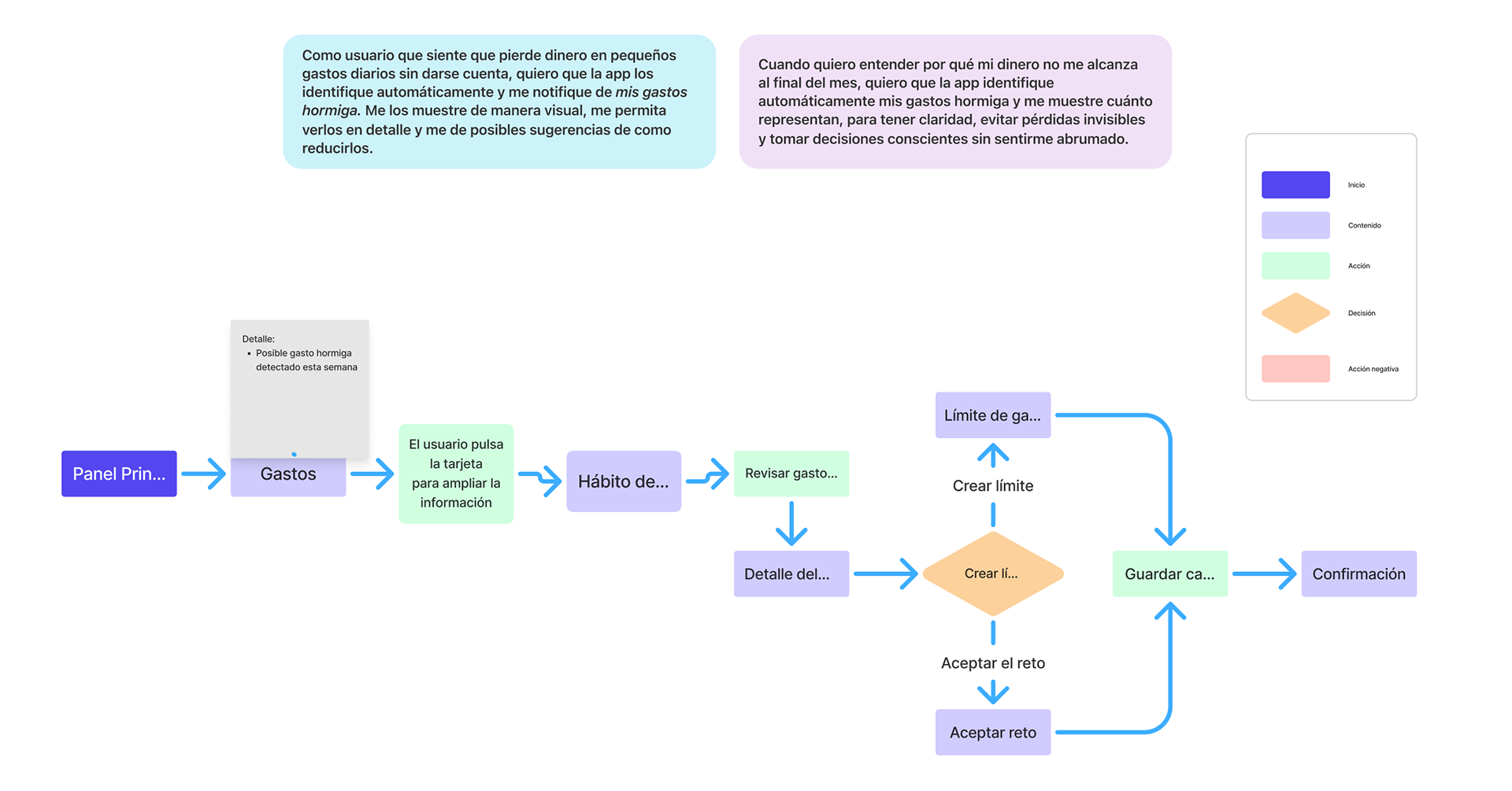
Following the ideation phase, low-fidelity prototypes were created in Excalidraw to visualize the user flow for reporting a small everyday expense.
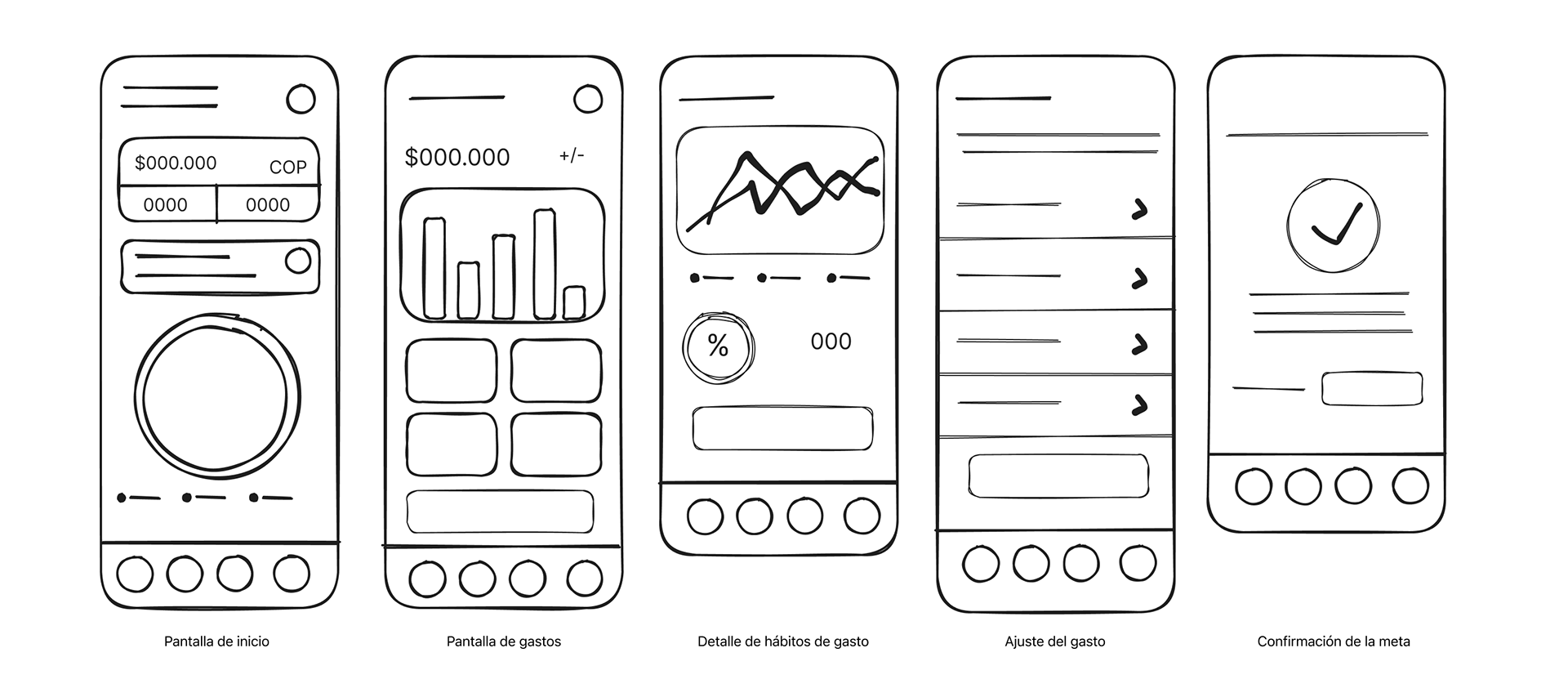
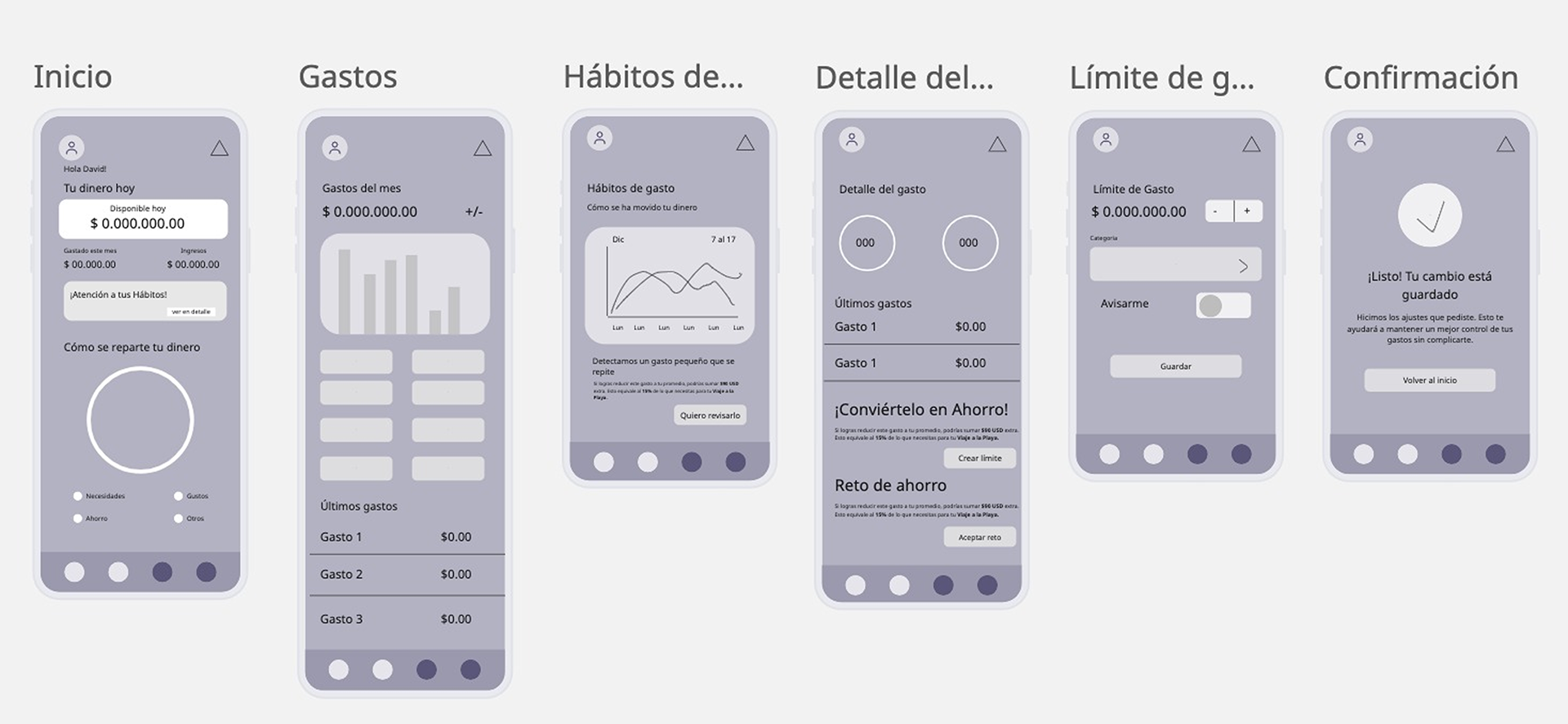
Next, mid-fidelity wireframes were created in Miro to further refine the layout, content hierarchy, and definition of interface components.